Technology
Circular Renewables: Recycling Solar & Wind
Circular economy can keep solar panels and wind turbines out of landfills
The International Electrotechnical Commission (IEC) is drafting standards that will let wind turbines and solar PV modules be repaired, refurbished or recycled, turning today’s e‑waste into a resource. Alistair Mackinnon, chair of IECRE, says the sector is “mature and multi‑billion” but now faces the challenge of what to do with assets that reach the end of their design life (http://www.pv-magazine.com/2026/09/04/a-circular-future-for-renewables/). The IEC’s new public‑available specification (PAS) – currently under development – and IEC 61400‑28 (2025) already set minimum requirements for life‑extension and safe reuse of wind‑farm assets (https://www.iec.ch/taxonomy/term/803). Together they create a roadmap for a circular future.
Solar PV recycling is improving but still costly
Today about 75 % of a PV module can be recovered thanks to high‑performance sorting and mechanical processes, according to IEC Technical Committee 82 secretary George Kelly (http://www.pv-magazine.com/2026/09/04/a-circular-future-for-renewables/). Glass and aluminium frames are easy to recycle; silicon cells, polymers and copper wiring are the hard‑to‑grab fraction. Transport to specialised facilities and the need for disassembly keep costs high, which is why many operators still view recycling as a last resort. The EU’s WEEE directive obliges producers to collect and treat PV waste and sets recovery targets (https://www.photorama-project.eu/eu-regulation-pushing-forward-pv-recycling-the-wwee-directive/).
Wind turbine blades are the biggest recycling hurdle
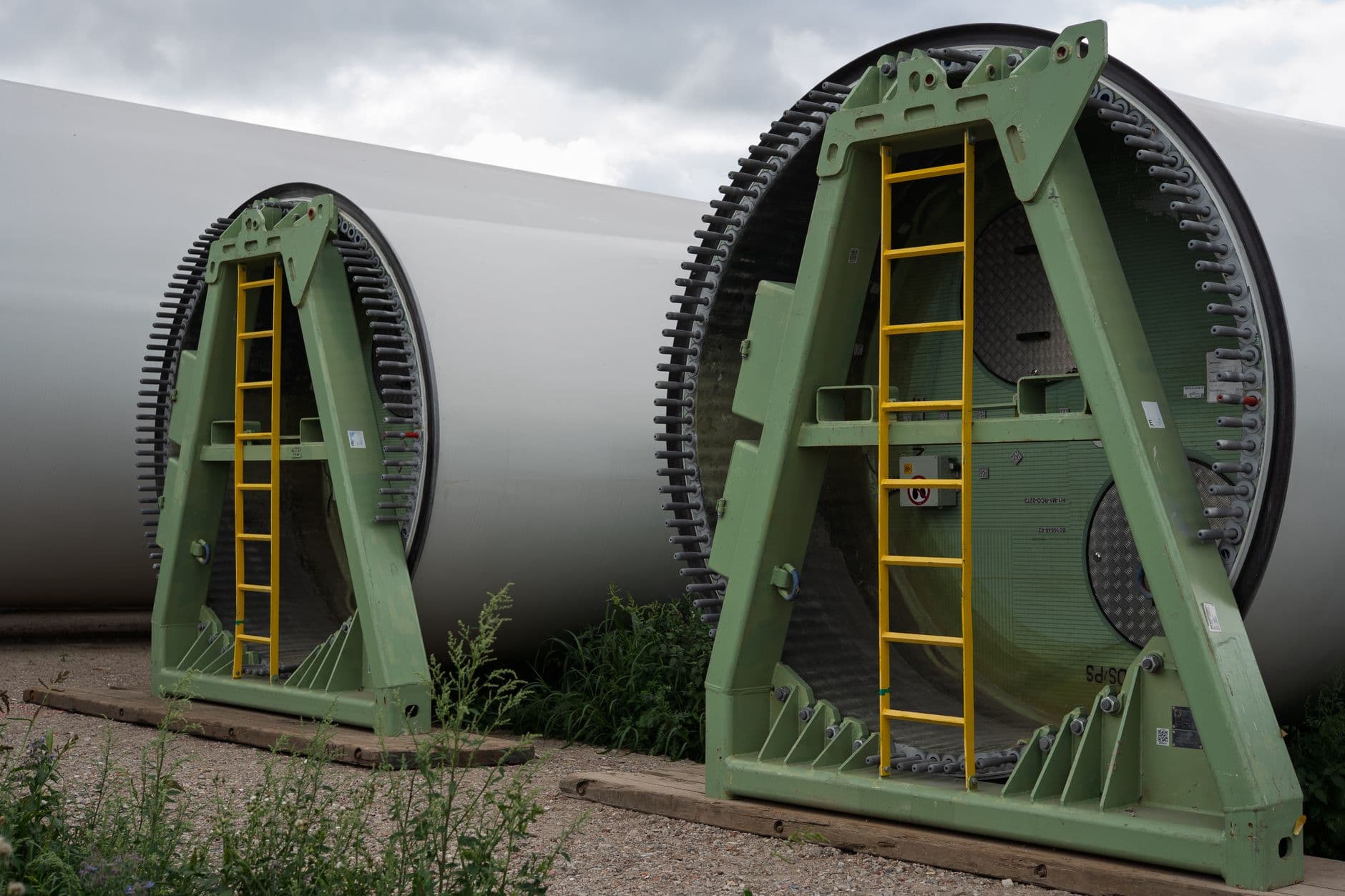
Wind blades are typically made of epoxy‑resin composites that cannot be melted, making them “virtually impossible to recycle,” says Mackinnon (http://www.pv-magazine.com/2026/09/04/a-circular-future-for-renewables/). New thermoplastic composites and recyclable epoxy formulations are entering the market, and many turbines installed in the early 2000s will start retiring in the coming years. Current mechanical‑recycling pathways crush blades into filler for cement or fibre‑board, but the value chain is still nascent (https://pmc.ncbi.nlm.nih.gov/articles/PMC7957806/).
Standards and business models are converging
The IEC is working on three parallel tracks: (1) repair‑first scenarios that extend module life at low cost, (2) second‑life deployments in off‑grid or low‑income communities, and (3) full‑material recycling. For wind, IEC 61400‑28 defines inspection, refurbishment and certification procedures that let turbines operate safely beyond their original 20‑30 year design life (https://www.iec.ch/taxonomy/term/803). These standards aim to lower the economic barrier to circularity by providing clear, internationally recognised certification.
Environmental upside: more energy, less waste
Recycling 75 % of a typical 10 kWp residential system (which produces ~17 000 kWh / year in central Israel) would recover roughly 12 750 kWh of embodied energy each year. Because each kWh avoids about 0.5 kg CO₂, extending the system’s life by five years would avoid roughly 40 tonnes of CO₂ – comparable to the annual sequestration of a few thousand average‑size trees. Extending module life by five years also adds about ₪40 800 in avoided electricity purchases at the residential tariff (₪0.48/kWh), thereby shortening the simple payback period.
What it means for Israel
Israel’s renewable‑energy targets (20 % by 2025, 30 % by 2030) rely heavily on rooftop PV. A typical 10 kWp home system costs ~₪31 500 and yields ~₪8 160 of electricity value each year. If the IEC‑driven repair scenario adds five extra years of service, the system’s lifetime revenue rises substantially and the payback period is reduced. Recycling 75 % of the module’s material would keep a significant amount of glass, aluminium and copper out of landfills, aligning with Israel’s waste‑management goals and reducing the need for new raw‑material extraction. Homeowners can therefore expect a slightly faster ROI and a greener footprint.
Outlook: scaling circularity worldwide
By 2050, wind is projected to supply about 35 % of global electricity under the IEA Net‑Zero scenario (https://eprints.whiterose.ac.uk/id/eprint/230228/1/NRCT-24-052_EoL%20wind%20turbine_accepted.pdf). If the IEC standards are adopted globally, the combined recycling and life‑extension of PV and wind assets could make a substantial contribution to reducing e‑waste and CO₂ emissions.
Sources & further reading
- A circular future for renewables - pv magazine Global
- wind energy | IEC
- End of life management for wind turbines
- Sustainable End-of-Life Management of Wind Turbine Blades: Overview of Current and Coming Solutions - PMC
- Recycling materials from green energy technologies (Signal) | Indicators and signals | European zero pollution dashboards (EEA)
FAQ
How much of a solar panel can currently be recycled?
Around 75 % of a PV module can be recovered using modern sorting and mechanical processes, according to IEC experts.
Why are wind turbine blades hard to recycle?
They are made of epoxy‑resin composites that cannot be melted, so they must be crushed and used as filler in cement or fibre‑board.
What new standards are being created for renewables?
The IEC is publishing a PAS for solar‑module repair and IEC 61400‑28 (2025) for wind‑farm life‑extension and safe reuse.
Will recycling solar panels lower my electricity bill?
Recycling itself doesn’t lower the bill, but repairing panels to add five more years of service can cut the payback period from 3.9 to about 3.2 years for a typical Israeli home system.
How does circularity help Israel meet its renewable targets?
Extending the life of rooftop PV and recycling its materials reduces the need for new installations, supporting the 30 % renewable electricity goal for 2030.
Are there any incentives for circular solar projects in Israel?
The Ministry of Energy is consulting on a “circular‑solar” incentive that would reward repair and second‑life deployments, but details are still being finalised.
Share this post
More from Technology
6
Floating Solar Tracker Boosts Yield by 20%
Noria Energy’s Airon floating‑solar tracker promises up to 20 % more electricity than fixed‑tilt FPV systems at similar cost, with commercial shipments slated for mid‑2027.
Israel’s Food Giant Goes 100% Green Power
Osem Nestlé has become the first Israeli food‑industry company to run entirely on renewable electricity, showcasing how solar power and green contracts can cut costs and emissions.

Silicon Solar Panels Slash Space Power Costs
Source Energy’s silicon solar modules can be built for under $5 per watt, slashing space‑power costs and opening new opportunities for Israeli satellite firms.
Array Tech Triples US Tracker Capacity
Array Technologies opened a $50 million Albuquerque factory that triples its U.S. solar‑tracker capacity, creates 300 jobs and could help lower tracker prices for Israeli rooftop installations.
Inclusion Fuels Solar Growth in Europe
Hanna König says inclusive, safe‑to‑disagree workplaces are essential to close the solar sector’s talent gap and accelerate the energy transition.
Super El Niño Slashes South Solar, Boosts North
Super El Niño 2026 created a pronounced north‑south solar split in South America, with sunnier conditions in the north and reduced irradiance in the south, while rare Atacama snowstorms threatened desert PV output.