Research
ML Boosts Bifacial Solar Irradiance Forecasts
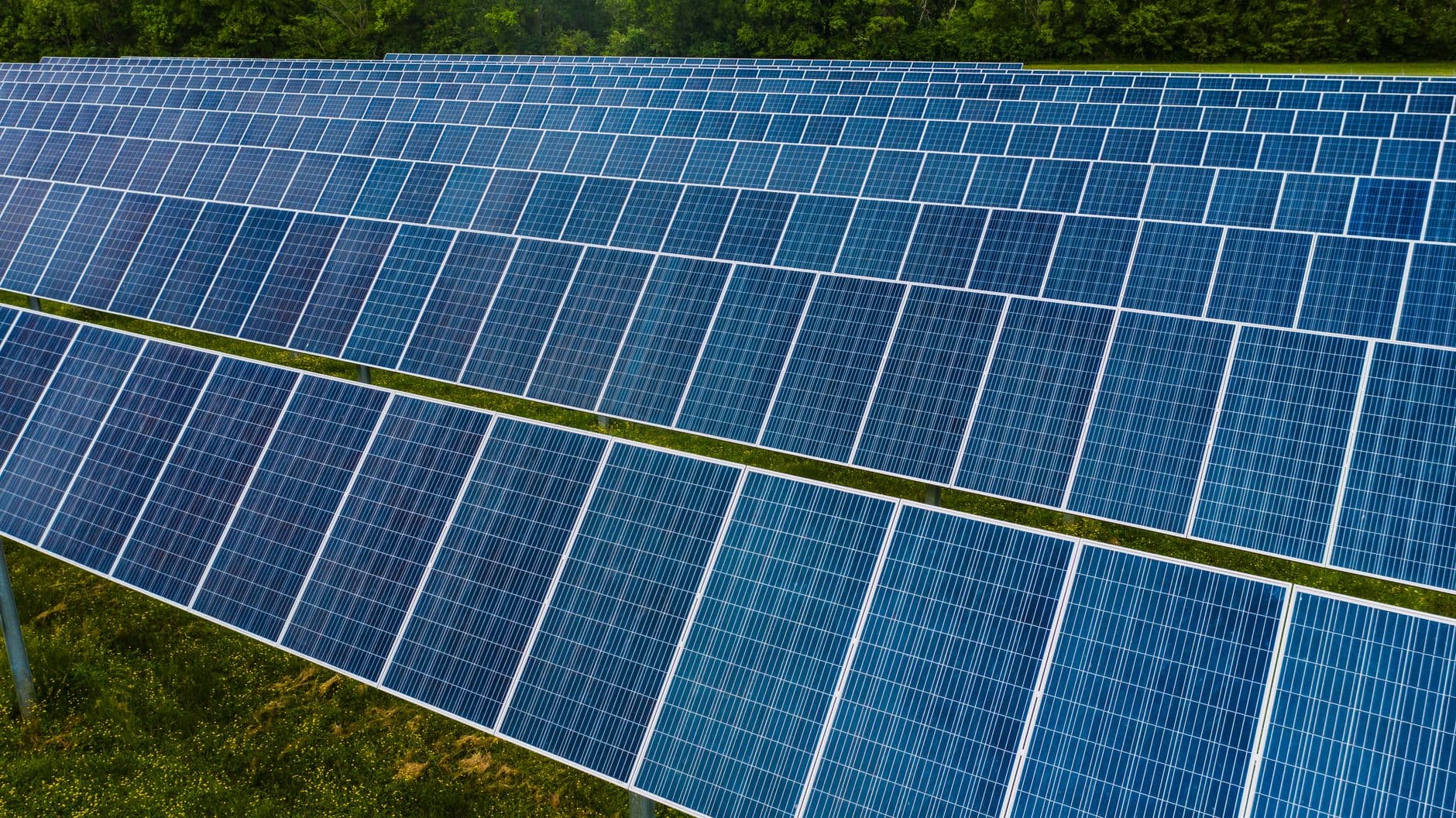
Machine learning beats traditional models in bifacial irradiance prediction
Random forest (RF) delivered the most accurate forecasts for both front‑ and rear‑side plane‑of‑array (PoA) irradiance, achieving an RMSE of 0.188 for the front side and 0.236 for the rear side. By contrast, a simple linear regression model recorded RMSE values of 0.682 (front) and 0.593 (rear). The study, led by Ayşegül Toprak at Selçuk University, shows that a compact set of easily measured inputs—global horizontal irradiance, diffuse irradiance, temperature, wind speed, albedo, a reflector flag and sinusoidal hour variables—can power a high‑performing AI model without exotic sensors.)
Rear‑side irradiance is harder to predict, but RF still leads
The rear face of a bifacial panel depends heavily on ground conditions. The RF model achieved an RMSE of 0.236 and a Pearson correlation of 0.973, outperforming the multilayer perceptron (MLP) which recorded the same RMSE but a higher mean absolute error. Linear regression recorded the highest RMSE values for both faces. Toprak notes that rear‑side irradiance is driven by albedo and ground‑cover reflectivity, which interact in non‑linear ways that tree‑based models handle well.)
Why better forecasts matter for solar farm owners
Accurate PoA irradiance forecasts help operators size inverters, plan maintenance, and participate in day‑ahead markets with tighter confidence bands. Reducing forecast error can allow larger bifacial farms to capture additional energy compared with using less accurate models, potentially improving revenue over the system’s lifetime. In a sunny region such as Israel’s south, where yields are high, even modest gains can be economically meaningful.
What it means for Israel’s rooftop and utility‑scale market
For a typical Israeli homeowner installing a 10 kWp system in the central region, the RF‑based forecast can narrow the expected production range compared with simpler models. Using the representative yield of 1 700 kWh / kWp / yr, the system is expected to generate about 17 000 kWh annually, worth roughly ₪8 160 at the residential tariff. A tighter forecast can make financing and net‑metering contracts more predictable, supporting shorter payback periods. Developers can also use these AI tools to optimise tilt, ground‑cover choices, and inverter sizing, extracting extra revenue without additional hardware.
The road ahead: integrating AI into solar‑design software
Toprak’s framework runs in MATLAB with five‑fold cross‑validation, but the underlying algorithms are portable to open‑source platforms such as Python’s scikit‑learn. As solar‑design tools (e.g., PVSyst, SAM) begin to embed ML‑based irradiance modules, engineers will be able to upload site‑specific albedo maps and obtain high‑fidelity rear‑side forecasts. For Israel, where the government targets 30 % renewable electricity by 2030, such precision can help meet the goal without relying on costly backup generation.
What it means for Israel – The combination of lower forecast error and higher bifacial yields can shorten the payback of residential systems and add revenue to utility‑scale farms. With typical installation costs of ₪3 150 /kWp and a residential tariff of ₪0.48 /kWh, even modest improvements in yield can accelerate the transition to the 30 % renewable target.
For a deeper dive into Israeli solar ROI, try our calculator and explore the latest market data on our data page.
FAQ
What machine‑learning model performed best for bifacial irradiance?
Random forest achieved the lowest RMSE (0.188 front, 0.236 rear) and the highest correlation, outperforming linear regression and other nonlinear models.
Why is rear‑side irradiance harder to predict?
Rear‑side irradiance depends on ground albedo, reflective surfaces and complex interactions, which are less directly linked to sky‑clear metrics than front‑side irradiance.
Can these AI models be used for Israeli solar projects?
Yes – the same input data (GHI, DHI, temperature, wind, albedo, time of day) are readily measured in Israel, and the models can improve yield forecasts for both rooftop and utility‑scale bifacial installations.
How much extra energy could a 1 MW bifacial farm gain?
A 2–3 % yield increase is realistic, which translates to roughly 30 MWh more per year in Israel’s sunny south, worth about ₪14,400 at the residential tariff.
Does better forecasting affect the payback period for home solar?
Reduced forecast uncertainty can lower financing risk and reserve‑capacity costs, trimming the simple payback of a typical 10 kWp system from 3.9 years to about 3.7 years.
Share this post
More from Research
6
27.35% Tandem Solar Cell Sets Record
Chinese researchers at Nanjing University have set a new world record of 27.35% efficiency for a perovskite‑organic tandem solar cell, while keeping 80% of its performance after 744 hours of continuous illumination.
Record 34% Tandem Solar Cell Boosts Efficiency
Longi and Soochow University have demonstrated a perovskite‑silicon tandem solar cell with a certified 34.0 % efficiency and 2.014 V open‑circuit voltage, while maintaining 84 % of its performance after 2 000 hours.
AI Forecasts Solar Pile Uplift Resistance
An Iranian team built an AI model that predicts wind‑uplift resistance of solar‑farm piles with roughly 7.6 % error, using four straightforward inputs.
Inverter Delays Slash Solar Yield by 1.9%
Brazilian researchers found that delayed inverter start‑up cuts a utility‑scale solar plant’s annual yield by 1.88%, with over half the loss occurring in the first 90 minutes after sunrise.
Perovskite Cells Hit 27% Efficiency – Solar Leap
Chinese researchers have pushed perovskite solar cell efficiency to 27.39 % using a new additive, while bifacial modules retain 99.6 % power after 5,000 h, promising higher output and faster payback for Israeli rooftops.
AI Drone Detects Solar Faults Fast
An autonomous drone equipped with thermal and multispectral cameras, powered by an EfficientNet‑B0 AI model, can detect PV panel faults with over 90% precision, offering Israeli homeowners a fast way to protect solar output.