Research
27.35% Tandem Solar Cell Sets Record
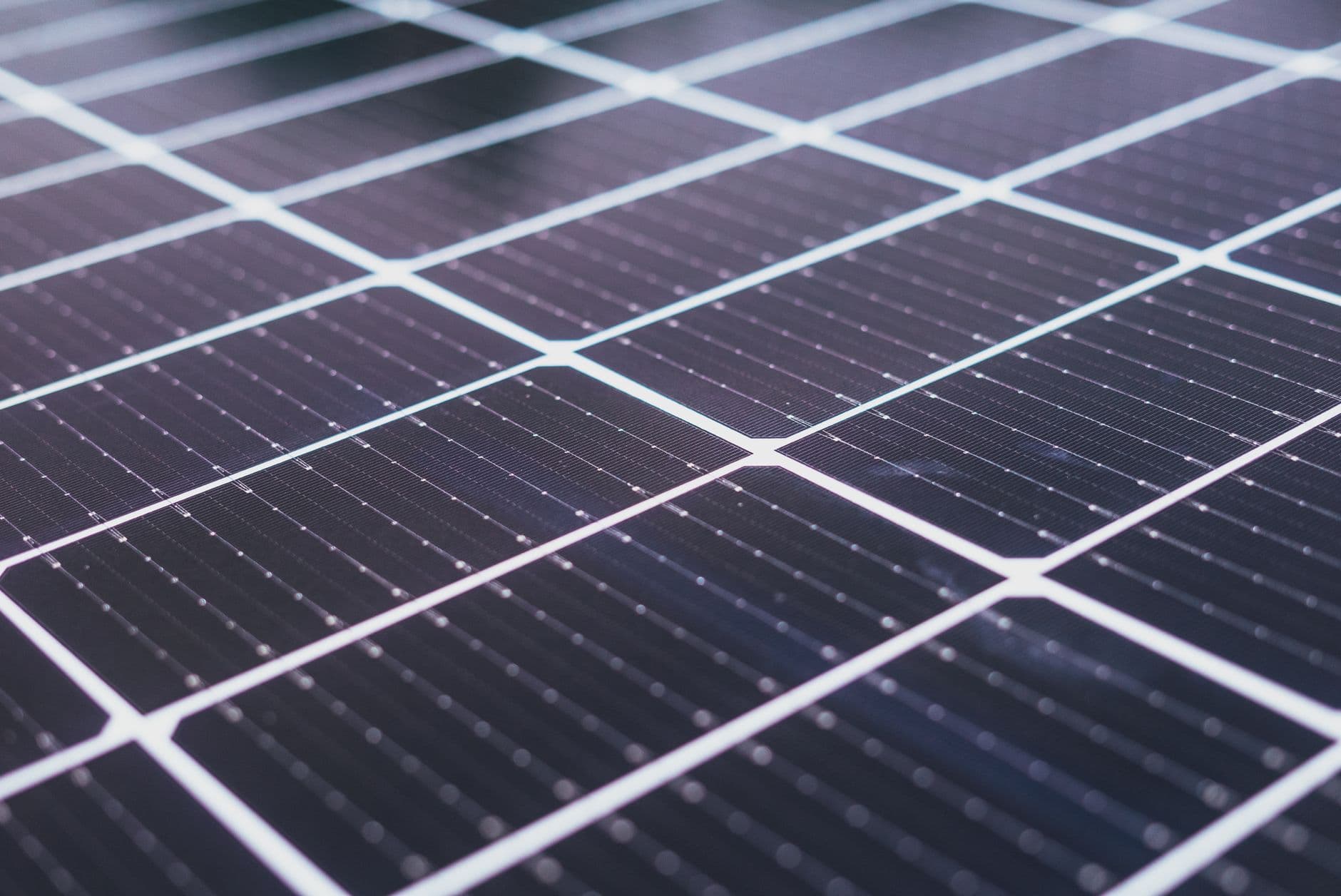
Record‑breaking 27.35% efficiency confirmed
Chinese researchers at Nanjing University have demonstrated a perovskite‑organic tandem solar cell that achieved a certified power conversion efficiency (PCE) of 27.35%, the highest ever reported for this architecture. The device retained 80 % of its initial performance after 744 hours of continuous 1‑sun illumination, showing both peak efficiency and promising stability.
The breakthrough was published in Joule and reported by pv‑magazine and Perovskite‑Info. It marks a new milestone for tandem photovoltaics, which combine two sub‑cells to harvest a broader spectrum of sunlight.
How the low‑bandgap acceptor Zh‑F unlocked the gain
The key to the record lies in a newly synthesized non‑fullerene acceptor (NFA) called Zh‑F, which has an optical bandgap of 1.23 eV. By pairing Zh‑F with the high‑performance Y‑series acceptor BTP‑eC9 and the polymer donor PM6, the researchers built a ternary organic sub‑cell that delivers a 19.84% PCE, an open‑circuit voltage of 0.853 V, and a short‑circuit current density of 29.00 mA cm⁻². This organic layer captures more near‑infrared (NIR) photons, reducing spectral overlap with the perovskite top cell and improving photocurrent matching.
According to the team, “incorporating Zh‑F simultaneously enhances NIR photon harvesting, charge transport, exciton dissociation, and recombination dynamics while limiting voltage loss” – a combination that is highly suitable for tandem devices (Perovskite‑Info).
Stability: 80 % performance after 744 h of 1‑sun exposure
Beyond efficiency, durability matters for commercial adoption. The unencapsulated tandem cell kept 80 % of its initial output after roughly 744 hours (about 31 days) of continuous illumination at 1‑sun intensity. While still a short‑term test, this result represents a notable stability improvement over many earlier tandem prototypes.
The stability stems partly from the robust interconnecting recombination layer and the use of a low‑energy‑loss organic absorber, which together mitigate voltage losses and suppress degradation pathways common in perovskite‑only tandems.
Comparison with previous tandem records
Before this work, certified efficiencies for perovskite‑organic tandems ranged from 22.0 % to 26.4 %, with the best‑reported value of 26.4 % coming from a Singapore team in June 2025 (pv‑magazine). The Nanjing University device outperforms the prior benchmark by roughly one percentage point, a significant leap given the diminishing returns as efficiencies approach the Shockley‑Queisser limit for two‑junction cells.
For context, monolithic perovskite‑only tandems have recently reached 25.22 % certified (PMC). The new 27.35 % figure demonstrates that adding a well‑engineered low‑bandgap organic sub‑cell can push the combined system beyond what perovskite‑only stacks can achieve today.
What it means for Israel’s solar future
Israel’s solar market is driven by high irradiance (≈1,700 kWh kWp⁻¹ yr⁻¹ in the central region) and ambitious renewable‑energy targets (30 % by 2030). Using the typical yield of 1,700 kWh per kWp per year, a 10 kW rooftop system would generate roughly 17,000 kWh yr⁻¹ under current conditions.
Because the new tandem technology delivers a higher conversion efficiency than conventional silicon modules, it could increase annual energy production and consequently shorten the simple payback period compared with typical installations. With a typical turnkey cost of ₪3,150 /kWp, the investment cost for a 10 kW system remains around ₪31,500, and the higher output would improve the economic case for homeowners.
These considerations illustrate that even modest efficiency gains can have a meaningful impact on the economics of rooftop solar in Israel, supporting the country’s drive toward its renewable‑energy goals while reducing the required roof area for a given electricity output.
Outlook: scaling the tandem breakthrough
The Nanjing University team’s record is a laboratory proof‑of‑concept, but the underlying chemistry—especially the Zh‑F acceptor—offers a clear pathway for scale‑up. Future work will need to address long‑term encapsulation, large‑area uniformity, and cost‑effective manufacturing. If those challenges are met, the 27 %‑plus efficiency could become the new baseline for commercial tandem modules, edging the global solar industry closer to the theoretical limits and helping countries like Israel meet their climate goals faster.
For readers interested in estimating their own solar ROI, try our interactive calculator and explore the latest market data on our data page.
Sources & further reading
- Chinese scientists achieve record-breaking 27.35% efficiency for perovskite-organic tandem solar cell - pv magazine Global
- New near-infrared acceptor brings perovskite-organic tandem cells to 27.35% efficiency | Perovskite-Info
- Recent Progress on High-Efficiency Perovskite/Organic Tandem Solar Cells - PMC
- Perovskite/organic tandem solar cells: a review - Energy Lab
- High-Efficiency and Low-Energy-Loss Organic Solar Cells Enabled by Tuning Conformations of Dimeric Electron Acceptors | CCS Chemistry
FAQ
What is a perovskite‑organic tandem solar cell?
It’s a two‑layer solar device where a perovskite top cell captures high‑energy light and an organic bottom cell harvests near‑infrared photons, together converting more sunlight than a single‑junction panel.
How does the new Zh‑F acceptor improve efficiency?
Zh‑F has a very low bandgap (1.23 eV) that extends absorption deep into the near‑infrared, balancing the current generated by the perovskite layer and reducing voltage losses.
Is the 27.35% figure certified?
Yes, the cell was certified at 26.88% PCE, with the laboratory measurement reaching 27.35% under standard test conditions.
How stable is the new tandem cell?
The unencapsulated device retained 80% of its initial output after about 744 hours (≈31 days) of continuous 1‑sun illumination.
What does this mean for Israeli homeowners?
Higher efficiency means more kWh per installed kW, shortening the payback period of a typical 10 kW rooftop system from roughly 4 years to about 3 years under current tariffs.
Can this technology be commercialized soon?
Scaling challenges remain—especially large‑area uniformity and long‑term encapsulation—but the chemistry shows a clear path toward mass production.
Share this post
More from Research
6
Record 34% Tandem Solar Cell Boosts Efficiency
Longi and Soochow University have demonstrated a perovskite‑silicon tandem solar cell with a certified 34.0 % efficiency and 2.014 V open‑circuit voltage, while maintaining 84 % of its performance after 2 000 hours.

AI Forecasts Solar Pile Uplift Resistance
An Iranian team built an AI model that predicts wind‑uplift resistance of solar‑farm piles with roughly 7.6 % error, using four straightforward inputs.

Inverter Delays Slash Solar Yield by 1.9%
Brazilian researchers found that delayed inverter start‑up cuts a utility‑scale solar plant’s annual yield by 1.88%, with over half the loss occurring in the first 90 minutes after sunrise.
Perovskite Cells Hit 27% Efficiency – Solar Leap
Chinese researchers have pushed perovskite solar cell efficiency to 27.39 % using a new additive, while bifacial modules retain 99.6 % power after 5,000 h, promising higher output and faster payback for Israeli rooftops.

AI Drone Detects Solar Faults Fast
An autonomous drone equipped with thermal and multispectral cameras, powered by an EfficientNet‑B0 AI model, can detect PV panel faults with over 90% precision, offering Israeli homeowners a fast way to protect solar output.
פֶרוֹוֹוֹקְסִיד 23.5% ללא מייצב – מהפכה בתאורי שמש
חוקרים פיתחו שיטת צמיחה מבוססת זרע שמביאה לתאורי פֶרוֹוֹוֹקְסִיד יעילות של 23.51% ללא מייצבים, עם יציבות של 99% אחרי 3,000 שעות.