Markets
India's Solar Module Glut Slashes Factory Use to 35%

India’s solar module overcapacity now limits factories to 35‑40% utilization
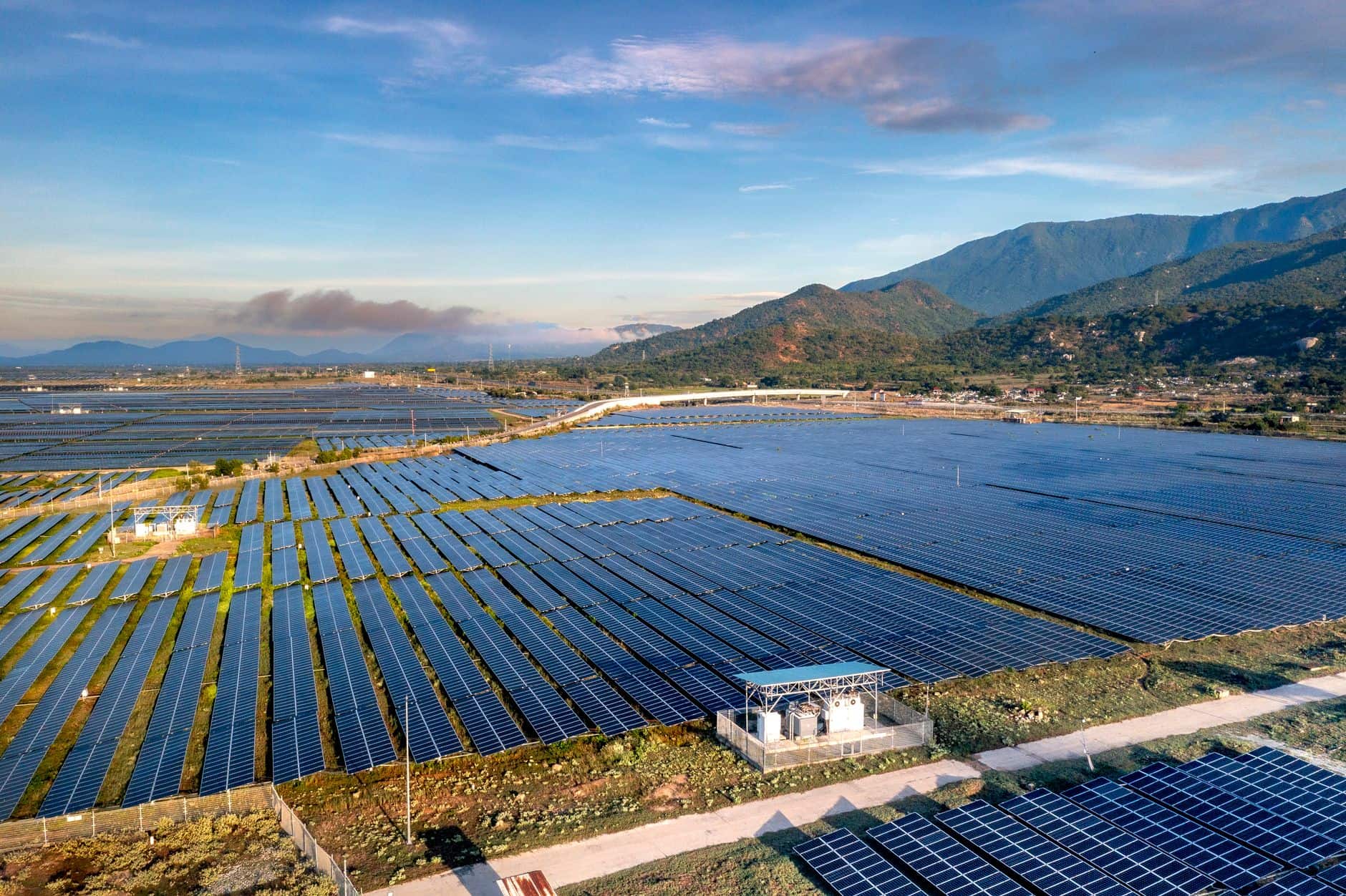
India’s solar module manufacturing capacity has ballooned to 233 GW, yet factories are only running at 35‑40 % of their design capacity. The gap stems from a rapid focus on modules while upstream segments (cells, wafers, polysilicon) lag far behind, creating a classic over‑capacity squeeze.
The Institute for Energy Economics and Financial Analysis (IEEFA) together with JMK Research released a new report, Assessing overcapacity risk in India’s solar PV manufacturing market, that documents the imbalance. According to the study, module capacity is nearly seven times the cell capacity and 116 times the ingot‑and‑wafer capacity, leaving the supply chain heavily dependent on imported silicon, mainly from China.
“India has added module capacity faster than the market can absorb it,” said Prabhakar Sharma, senior consultant at JMK Research. With 135 GW of additional module capacity already planned or under construction, utilization pressures are set to deepen.
Why factories are under‑utilised: the supply‑chain mismatch
The report shows that while India now ranks as the world’s second‑largest solar‑module hub, its cell, wafer and polysilicon production has not kept pace. This creates a bottleneck: manufacturers can assemble modules, but they must still import most of the raw silicon.
- Module capacity: 233 GW (June 2026) – nearly seven times the cell capacity and about 116 times the ingot/wafer capacity.
- Utilisation benchmark: industry analysts consider 50‑65 % utilisation necessary for sustainable operations; current levels are well below that.
Because the upstream supply is thin, module makers cannot achieve the sustainable utilisation range, leading to lower margins, higher risk of stranded assets, and a push for manufacturers to move upstream.
Export markets can’t fully offset the surplus
India’s module exports are heavily concentrated in the United States, which accounted for ≈97 % of export volumes in fiscal 2026. However, combined U.S. anti‑dumping duties of over 200 % have slashed Indian shipments, causing a 44‑47 % decline from the fiscal 2024 peak.
The IEEFA‑JMK report suggests the European Union could become a medium‑term outlet as its supply‑chain policies encourage diversification. Still, without closing the cost and technology gap with Chinese manufacturers, export growth alone will not solve the overcapacity problem.
What could bridge the gap? Upstream integration and R&D
Industry experts argue that vertical integration – moving from module‑only production into cells, wafers, and eventually polysilicon – is the most viable path. Charith Konda (IEEFA) notes that “sustained export growth depends on closing the cost and technology gap with China through scale, integration, and operational efficiency.”
The report also recommends:
- Balanced incentives across the whole value chain, not just modules.
- Stronger industry‑research collaboration to accelerate domestic silicon production.
- Faster transmission and right‑of‑way (RoW) clearances to enable larger domestic solar deployments.
- Support for exporters through time‑bound, targeted programs.
If Indian manufacturers can diversify into silicon production – for example by joining the Pax Silica coalition – they could reduce reliance on Chinese imports and improve cost competitiveness.
What it means for Israel’s solar market
While India’s overcapacity story is a distant market, the dynamics echo challenges Israel faces as it scales up renewable generation. Israel’s 30 % renewable electricity target for 2030 relies heavily on solar PV, yet the country’s domestic manufacturing base is modest, making it dependent on imports, mainly from China.
Using the typical Israeli figures (residential tariff ≈ ₪0.48/kWh, installation cost ≈ ₪3,150/kWp, central‑region yield ≈ 1,700 kWh/kWp / yr), a 10 kWp rooftop system would generate about 17,000 kWh/year, worth roughly ₪8,160 annually. At a ₪31,500 install cost, the payback period is ≈ 3.9 years – well within the system’s 25‑year lifetime.
If Indian manufacturers succeed in moving upstream and lowering module costs, Israeli developers could benefit from cheaper imports, potentially shortening payback periods further. Conversely, a prolonged overcapacity could keep prices high, underscoring the importance of local R&D and diversification to avoid reliance on volatile global supply chains.
Outlook: consolidation and a more balanced supply chain
The IEEFA‑JMK analysis predicts that industry consolidation will intensify as smaller, non‑integrated players struggle with low utilization. Larger, vertically integrated firms are better positioned to weather the slump and may lead the shift toward domestic silicon production.
By 2030, the report estimates that additional demand from data centers, green‑hydrogen, ammonia production, and exports could add 17‑22 GW of needed capacity – still far short of the 135 GW of planned module expansion. Without a strategic pivot upstream, India risks a decade‑long period of under‑utilised factories and stranded investments.
For stakeholders worldwide, the lesson is clear: capacity alone does not guarantee growth; the value lies in how efficiently that capacity is used and how deep the supply chain runs.
Bottom line
India’s solar‑module boom has outpaced demand, driving factory utilization down to 35‑40 % and raising the spectre of stranded assets. The path forward hinges on upstream integration, balanced incentives, and export diversification – a roadmap that could also inform Israel’s own renewable‑energy ambitions.
For a deeper dive into Israeli solar economics, try our ROI calculator and explore the latest market data on our data page.
FAQ
Why is India’s solar‑module utilization so low?
Factories are only at 35‑40 % because module capacity grew faster than the market and upstream parts (cells, wafers, polysilicon) are under‑developed.
How much module capacity does India have now?
India’s solar‑module manufacturing capacity reached about 233 GW in June 2026.
What role do exports play in easing the surplus?
Exports, mainly to the U.S., have fallen 44‑47 % due to high duties, so they can’t fully absorb the excess capacity.
What could help Indian manufacturers avoid stranded assets?
Moving upstream into cells, wafers and polysilicon, and improving R&D to close the cost gap with China.
How does this affect Israel’s solar market?
Cheaper Indian modules could lower Israeli installation costs, but reliance on imports highlights the need for local R&D and diversification.
When is the overcapacity expected to ease?
The report says the imbalance is unlikely to ease by 2030, even with an extra 17‑22 GW of demand from new sectors.
Share this post
More from Markets
6
South Korea to Add 3.5 GW Solar in 2026
South Korea will install about 3.5 GW of new solar capacity in 2026, surpassing the 3.1 GW added in 2025, as part of a broader push that includes community‑solar villages and line‑side storage.

US Tariffs Push Solar Module Prices Up
U.S. Section 232 tariffs are expected to modestly raise solar module prices, adding a small extra cost to Israeli rooftop systems and slightly extending payback times.

Tongwei Clears Antitrust Hurdle for Lihao Deal
Tongwei has received antitrust clearance to acquire Qinghai Lihao, a fast‑growing polysilicon producer, paving the way for expanded low‑carbon silicon capacity that could help lower solar‑module prices worldwide.
US Solar Adds 19.2 GW in H1 2026
The United States installed 19.2 GW of solar PV in the first half of 2026, driven mainly by a 61 % surge in utility‑scale projects, while residential solar slipped and permitting bottlenecks loom.
Chile’s Solar Curtailment Hits Record, Storage Ramps Up
Chile curtailed a record 2,680 GWh of solar and wind power in the first seven months of 2026, while battery storage capacity surged to over 2.6 GW, highlighting a growing flexibility gap.

Hormuz Crisis Sends Oil Prices 20% Higher
The Hormuz crisis has cut about 9 million barrels per day of oil, pushing Brent up 20 % and gas prices 40‑60 % higher, while making rooftop solar in Israel financially more attractive than ever.