Markets
China’s Solar Overcapacity Stalls Consolidation
China’s PV sector still swamped with excess capacity
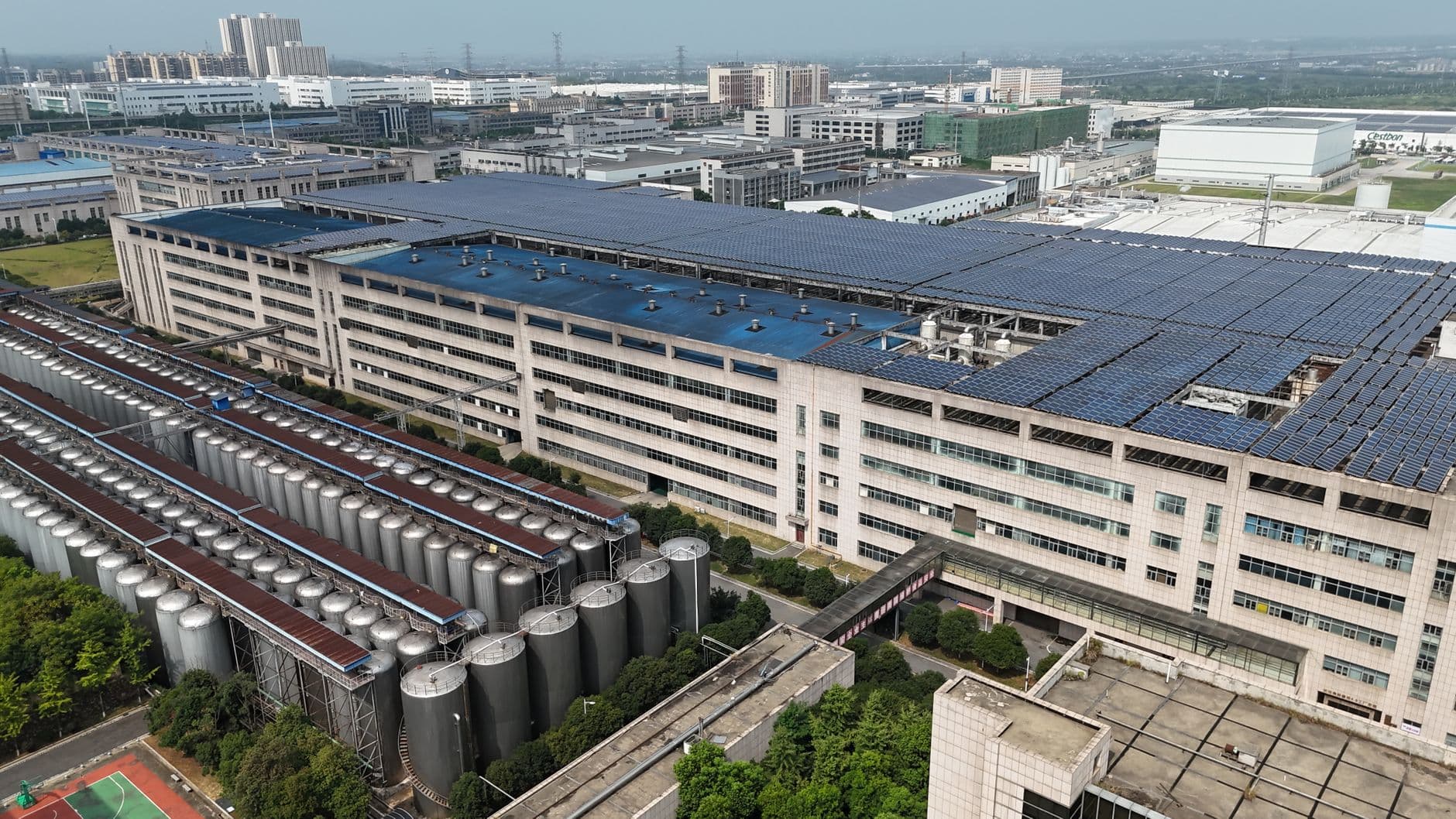
China’s solar‑panel manufacturers are still wrestling with a massive oversupply that began to surface in 2023 and remains acute in early 2024. The top five Chinese module makers posted an aggregate profit margin of ‑11 % in 2024, a stark reversal from the healthy 8‑12 % margins they enjoyed between 2019‑2023. This loss‑making situation is keeping consolidation – the merger of smaller firms into larger, financially stable players – painfully slow.
Private‑firm dominance makes coordination hard
Unlike the steel, cement or shipbuilding sectors where state‑owned enterprises dominate, China’s PV industry is almost entirely private. That private‑firm landscape means the government cannot simply order capacity cuts; each company still has a strong incentive to keep expanding to protect market share, even while publicly acknowledging the need to curb over‑investment. As Alexander Brown of MERICS explains, “Companies acknowledge the need to prevent prices from falling further and to stop over‑investment, but individually they still have incentives to expand.”
Rapid tech turnover fuels fragmentation
Solar technology evolves every two to three years, far quicker than the decades‑long cycles of cement or glass production. This fast pace lets older, less‑efficient lines stay in the market selling cheaper, slightly outdated modules abroad, further inflating capacity. The result is a highly fragmented sector where new entrants can appear easily, making it harder for the biggest players to absorb or eliminate excess capacity.
Domestic demand is the decisive lever – not geopolitics
Export markets still matter, but China’s internal solar demand now outweighs foreign sales in shaping manufacturers’ investment decisions. In the early‑2010s, Beijing boosted domestic installations to absorb surplus capacity after European trade barriers hit. Today, however, the government has not announced a comparable domestic‑demand stimulus, and analysts expect that without a strong internal market pull, consolidation will remain sluggish.
Government measures have so far missed the mark
Since 2024 Beijing has introduced a series of measures, including tighter efficiency and energy‑consumption requirements, which are only beginning to affect capacity. While these policies will eventually prune the weakest capacity, the cumulative effect is still limited. Companies are taking steps to reduce costs, but the sheer scale of overcapacity means the process will stretch over several years.
Why the biggest manufacturers are still afloat
The leading Chinese firms have diversified beyond pure panel production – they are involved in project development, downstream services and even non‑solar businesses. Coupled with strong local‑government support (tax breaks, loans, equity stakes), these diversified revenue streams keep them solvent despite negative margins.
What it means for Israel’s solar market
Israel imports a large share of its PV modules from China. A typical 10 kW home system in Israel costs about ₪31,500 (based on the typical turnkey cost of ₪3,150 /kWp) and, with an annual production of roughly 17,000 kWh at the residential tariff of ₪0.48/kWh, yields a simple payback of about 3.9 years. Any future reduction in module prices would further shorten the payback period, helping Israel move toward its 30 % renewable electricity target for 2030.
Outlook: a slow but inevitable trim
Analysts expect that over the next few years the combination of policy measures and continued cost‑cutting will lead to a modest but steady exit of the weakest capacity. Consolidation is likely to take the form of strategic alliances rather than large‑scale bankruptcies, preserving the global supply chain that Israel relies on while gradually easing price pressure on local installers.
What it means for Israel
Even a modest reduction in Chinese module prices can shorten the payback period for a typical Israeli rooftop system, making solar more attractive for homeowners and businesses. Faster returns boost financing uptake, support the country’s renewable‑energy goals, and reduce reliance on imported electricity. For anyone considering a home solar system, now is a good time to lock in a price before the market stabilises.
*Sources: pv‑magazine.com, MERICS, Reuters – China Solar Industry (general industry context).
FAQ
Why is consolidation in China’s solar industry taking so long?
Most Chinese PV firms are private, so the government can’t force capacity cuts, and rapid tech change lets older lines stay profitable abroad.
What profit margins did Chinese solar manufacturers record in 2024?
The top five Chinese solar firms averaged a **‑11 %** profit margin in 2024.
How does Chinese overcapacity affect Israeli solar prices?
If consolidation trims excess capacity, module prices could fall about **20 %**, reducing a typical 10 kW home system cost from ₪31,500 to roughly ₪25,200.
What is the payback period for a typical Israeli rooftop system?
At current costs (₪3,150/kWp) and the residential tariff (₪0.48/kWh), a 10 kW system pays back in about **3.9 years**; a 20 % price cut would cut that to **≈2.9 years**.
Will geopolitics drive the Chinese solar slowdown?
Geopolitics matters for investment locations, but domestic demand and internal policy are the main drivers of capacity adjustments.
When might we see real consolidation in China’s PV sector?
Analysts expect a gradual trim to begin in 2025‑2026 as higher energy prices and stricter standards force weaker players out.
Share this post
More from Markets
6
South Korea to Add 3.5 GW Solar in 2026
South Korea will install about 3.5 GW of new solar capacity in 2026, surpassing the 3.1 GW added in 2025, as part of a broader push that includes community‑solar villages and line‑side storage.

US Tariffs Push Solar Module Prices Up
U.S. Section 232 tariffs are expected to modestly raise solar module prices, adding a small extra cost to Israeli rooftop systems and slightly extending payback times.
Tongwei Clears Antitrust Hurdle for Lihao Deal
Tongwei has received antitrust clearance to acquire Qinghai Lihao, a fast‑growing polysilicon producer, paving the way for expanded low‑carbon silicon capacity that could help lower solar‑module prices worldwide.
US Solar Adds 19.2 GW in H1 2026
The United States installed 19.2 GW of solar PV in the first half of 2026, driven mainly by a 61 % surge in utility‑scale projects, while residential solar slipped and permitting bottlenecks loom.
Chile’s Solar Curtailment Hits Record, Storage Ramps Up
Chile curtailed a record 2,680 GWh of solar and wind power in the first seven months of 2026, while battery storage capacity surged to over 2.6 GW, highlighting a growing flexibility gap.

Hormuz Crisis Sends Oil Prices 20% Higher
The Hormuz crisis has cut about 9 million barrels per day of oil, pushing Brent up 20 % and gas prices 40‑60 % higher, while making rooftop solar in Israel financially more attractive than ever.